Food Vendors & Craft Vendors
Application Deadline: August 1, 2026
Join us for the 2026 Mushroom Festival in Kennett Square. We are now accepting vendor applications. Spaces are limited and fill quickly.
Craft Vendors
All craft applications are juried to ensure high-quality, original work. Preference is given to vendors offering mushroom-related items.
• Submit application by July 31, 2026
• Include photos of products and booth display (prior vendors are not exempt)
• Booth space: 10’ x 10’
• Canopies required and must be weighted (minimum 40 lbs per corner)
• Vendors must provide their own setup (tables, chairs, displays, etc.)
• Use of “Mushroom Festival” name or logos on products is not permitted
Acceptance notifications and space assignments will be emailed by August 14, 2026.
Food Vendors
Food vendors offering mushroom menu items receive priority consideration.
• Application deadline: July 31, 2026
• Booth space: 10’ x 10’
• Canopies required and must be weighted (minimum 40 lbs per corner)
• Setup: Friday at 6:00 PM or Saturday at 5:00 AM — no exceptions
• Vendors must operate within their assigned space
• Temporary Health Department permit required
• Certificate of Insurance required ($1,000,000 minimum)
• Electricity available for an additional fee
• Festival runs rain or shine
• Use of “Mushroom Festival” name or logos on products is not permitted
Food vendors are responsible for full compliance with health, safety, fire, and space regulations. Please review the full application packet for complete details.
Acceptance notifications and space assignments will be emailed by August 14, 2026.
Applications are first come, first reviewed. Early submission is strongly encouraged.
View Full guidelines & Apply Below.
The Mushroom Festival celebrates mushrooms, mushroom farms and Kennett Square—the Mushroom Capital of the World. Festival attendees can sample a variety of mushroom-centric foods, from fried mushrooms to mushroom soup and many other dishes, and learn about mystical and interesting process of mushroom growing. Attendees can also visit the many craft vendors, many of whom offer mushroom-themed goodies, visit the delightful Kennett Square boutiques, and enjoy a variety of restaurant options in Kennett Square, and more.
The Mushroom Festival has grown from a one-day, one-block local celebration to a nationally-recognized, two-day event that attracts many thousands of visitors to Kennett Square. With the help of many dedicated volunteers, the Festival has grown into one of the largest and most prestigious events in Pennsylvania.
While the Festival is a two day event in September, the Mushroom Festival lasts all year long with a Grants Program which provides grants to local non-profit organizations in Kennett Square from Mushroom Festival proceeds. To date, the Mushroom Festival has awarded more than $1.1 million to local non-profits and supported research on the health benefits of mushrooms.
This year’s Festival theme is “Harvesting 40 Years Together!” which encapsulates our dedication to nurturing not just the delicious and healthy fungi that we grow but also supporting the future of our community.
There are many things to enjoy at the Mushroom Festival, but at its core, the Mushroom Festival is an opportunity for the Kennett Square mushroom farms to give back to the community in which they work and live. The Mushroom Festival is a chance to highlight all the wonderful businesses and groups that support the Kennett Square community, including the mushroom farms which employ so many, as well as the businesses and restaurants that support our town.
Ever wonder how the mushrooms you see in the grocery store are grown? The white button, brown mushrooms and Portabella mushrooms actually start in a lab. Cereal grains are inoculated with mushroom spores and incubated until they develop into spawn or ‘mushroom seeds.’
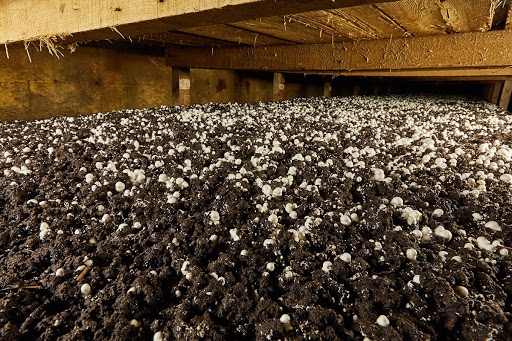
Next, at the mushroom farm, growers carefully prepare the growing medium for mushroom production. Farmers combine materials like hay, straw, corn cobs, cocoa shells, and horse or chicken manure and place it in stacked wooden beds mixed with the spawn.
It takes about three weeks to produce the first mushrooms for harvest. Throughout the growing period, mushroom farmers play Mother Nature, manipulating water, airflow, temperature fluctuation and more to enhance mushroom growth.
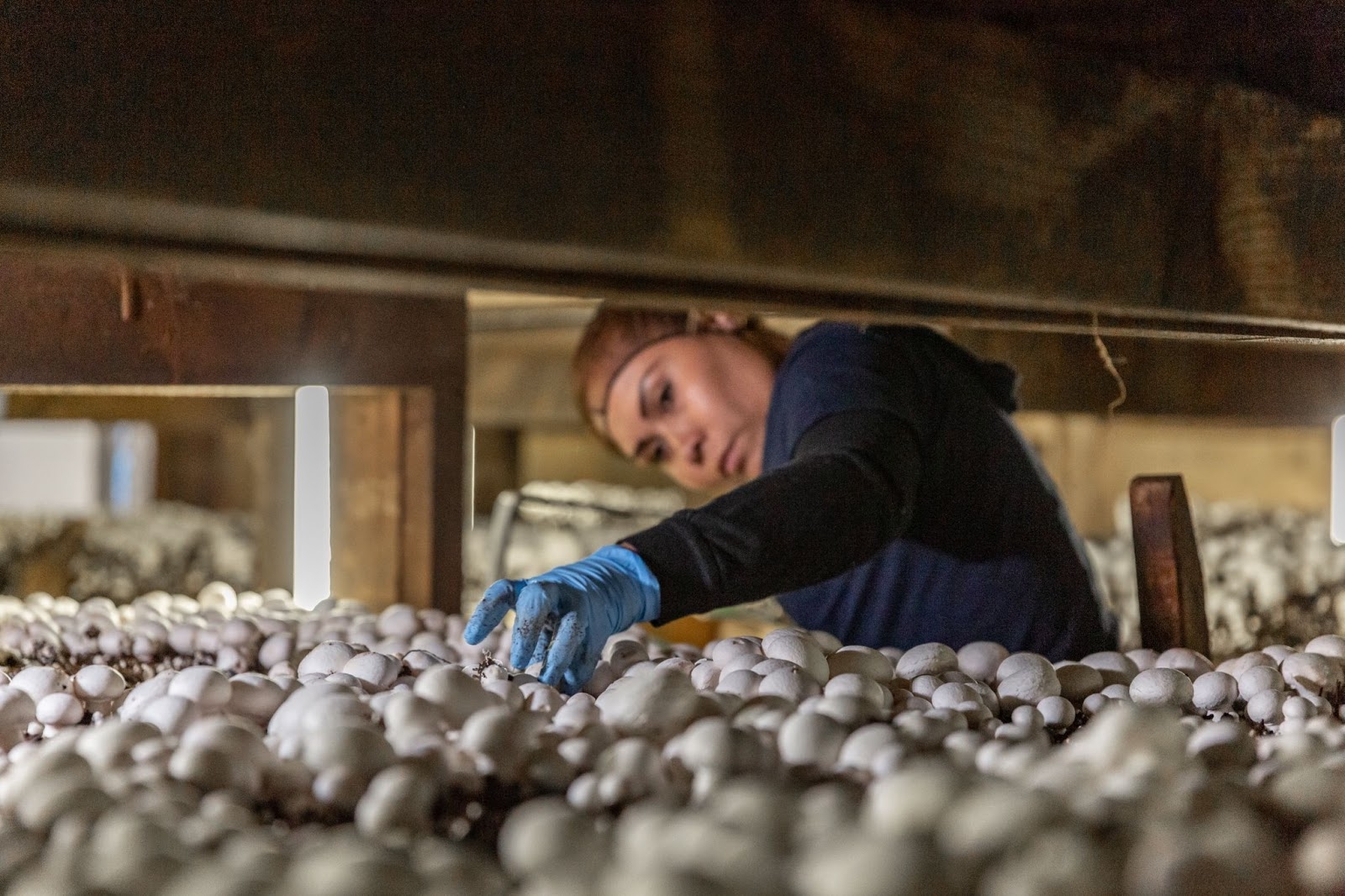
Each mushroom is harvested by hand. They mature at a varying times, and will be harvested for two to three weeks to fit customers’ needs.
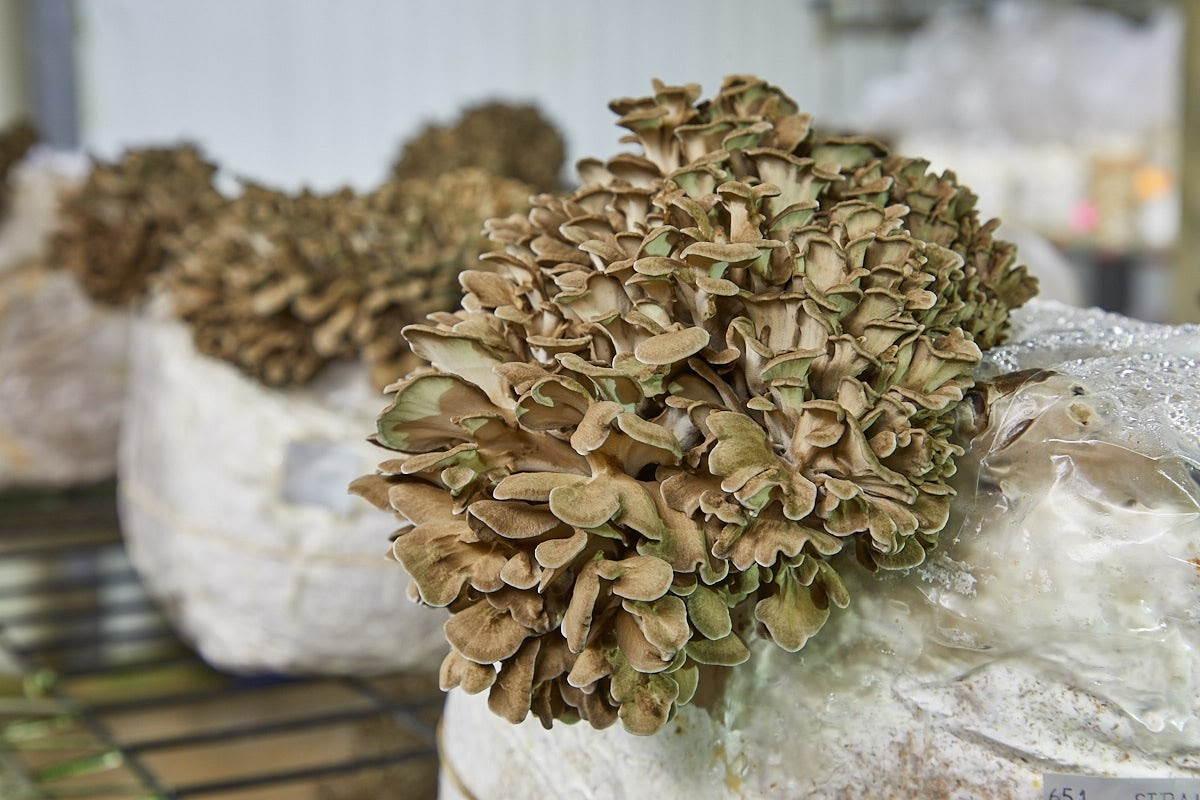
Specialty mushrooms like Shiitake, Oyster, Maiitake and others are grown a bit differently than the common white and brown button mushrooms. In general, these mushrooms are grown on logs or in bags The process of inoculating logs requires mycelium (spawn) to be placed inside the growing medium, whether natural or synthetic and then climate-controlled (temperature, humidity, light, and air). The ideal growing conditions for mushrooms are around 70 degrees Fahrenheit and greater than 90% humidity. Natural logs work well and oaks and maples serve as the best hosts. For natural logs, it is best if the log is newly cut so that it hasn’t dried out. Synthetic logs are just bagged mixes of sawdust, millet, rye, and water to keep feeding the mycelium.
Growing mushrooms is a unique blend of recycling, science, and efficacy. This powerful combination makes them one of the most sustainably produced foods in the U.S. Mushroom growers are known as ‘ultimate recyclers’ for their ability to convert byproducts and waste from other sectors of agriculture—the corn cobs, hay, straw, manure, etc—into the compost to grow mushrooms. Because of this recycling of other agriculture crops and byproducts, mushroom farms have a smaller environmental footprint than almost any other farm.
By any measure of water and energy inputs, and the low-CO2 emissions, mushrooms are a nutritious food that have a very small environmental footprint. More than being the "ultimate recyclers," mushroom growers are providing a sustainable, smart food source for a growing world population.
Full of powerful nutrients, mushrooms are increasingly begin named as a must-have on healthy plates, providing many of the same nutritional benefits as vegetables, as well as attributes commonly found in meat, beans, and grains.
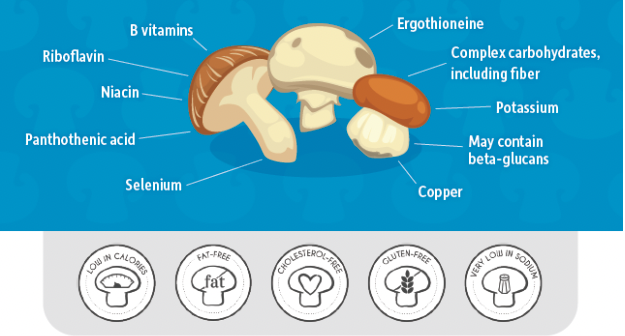
When it comes to health, researchers are increasingly turning to mushrooms.
Fight Against Cancer: Early studies show mushrooms might be a factor in reducing levels of PSA in prostate cancer patients and help prevent recurrence of hormone-dependent breast cancers.
Anti-aging: Mushrooms contain ergothioeine and glutathione antioxidants which work to protect the body from stress that can cause visible signs of aging and may also help prevent symptoms of Parkinson’s and Alzheimer’s.
Cognitive Decline: Researchers are finding that less than one cup of cooked mushrooms twice per week can help to reduce the odds of mild cognitive decline.
Mushrooms are big business in Pennsylvania—they are the #1 cash crop in the state. From Philadelphia to Phoenix, chances are, if you eat mushrooms on your pizza, in your salads, or as part of your burgers, they were grown on a Pennsylvania mushroom farm. The state leads the nation in mushroom production, with more than 50 commercial mushroom farms growing more than 500 million pounds of mushrooms each year.
Pennsylvania mushrooms growers have William Swayne to thank for the long tradition of mushroom growing in the area. A successful florist in Kennett Square, PA, in the late 1800s, he conceived the idea of growing mushrooms beneath his greenhouse benches. The results were encouraging enough that he decided a separate building would make it possible to control the growing conditions for mushrooms. He built his first mushroom house in the are and made it a commercial success. Soon, others joined in their own mushroom growing businesses and the ‘Mushroom Capital of the World’ was born.
Today, many of the Pennsylvania mushroom farms are owned and operated by local families, and in many cases, are multi-generational mom and pop farms passed down to sons and daughters, nephews and cousins in third, fourth, or even fifth generations.